Wheel Throwing vs Handbuilding: Pick Your First Class
Wheel throwing = round, symmetrical forms. Handbuilding = freeform, sculptural pieces. Here's an honest comparison so you pick the right first class.
You've decided to take a pottery class. Great. Now comes the first real question: wheel throwing or handbuilding?
Both are wonderful. Both are "real" pottery. And whichever you choose, you'll end up making things you're proud of. But they're genuinely different experiences, and one might suit you better than the other — at least to start.
Here's an honest look at both.
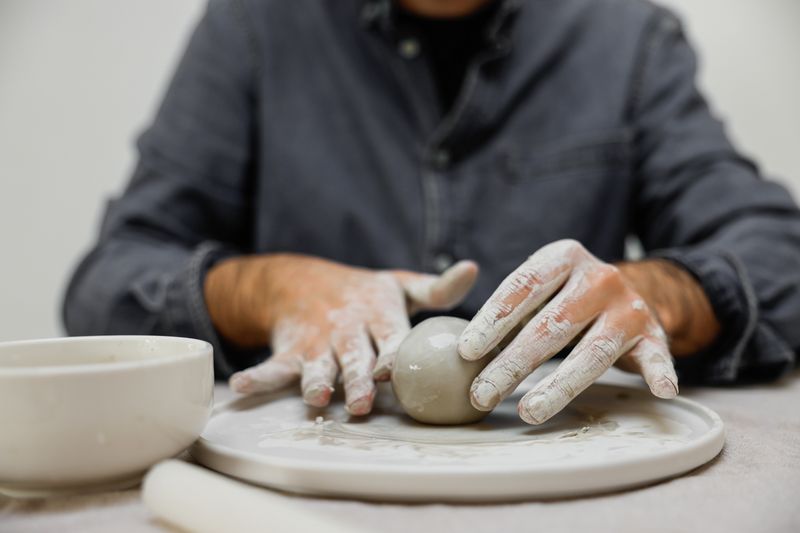
What Is Wheel Throwing?
Wheel throwing is what most people picture when they think of pottery: a spinning wheel, wet clay rising between your hands, shaping a form that seems to appear out of nothing. It's the technique from every pottery montage in every movie.
In practice, wheel throwing involves centering a lump of clay on a spinning wheel head, opening it into a hollow form, and pulling the walls up and out to create the shape you want. Bowls, mugs, cups, vases, plates — these are classic wheel-thrown forms.
What It Feels Like
Physical. Rhythmic. Sometimes frustrating, then suddenly deeply satisfying. Centering clay requires pressure, balance, and a willingness to let your body learn through repetition. Once it clicks — and it will — the feeling of clay responding to your hands on a spinning wheel is genuinely meditative.
What You'll Make
Wheel throwing excels at round, symmetrical forms: bowls, cylinders, cups, mugs, plates, vases. With practice, you can throw trim, add handles, and combine thrown pieces into more complex forms.
The Learning Curve
Steeper than handbuilding. Centering is the first major hurdle, and it takes most beginners a few sessions to get consistent. But progress accelerates once the fundamentals click. By the end of a 4-week course, most students are throwing recognizable bowls and cylinders confidently.
What Is Handbuilding?
Handbuilding is creating pottery without a wheel — using only your hands and simple tools. It's the oldest form of pottery (humans were handbuilding pots thousands of years before the wheel was invented) and it remains one of the most versatile and creative approaches to clay.
Three core techniques make up handbuilding:
- Pinch pots: Starting with a ball of clay and shaping it by pressing with your thumbs and fingers. Intuitive, meditative, no tools required.
- Coil building: Rolling ropes of clay and stacking them to build walls. You can create forms of any size and shape — from small cups to massive vessels.
- Slab building: Rolling flat sheets of clay and cutting, folding, and joining them into forms. Think of it like architectural construction in clay.
What It Feels Like
Meditative. Methodical. Freeing. There's no spinning wheel to negotiate, no centering to master. You work at your own pace, building up form gradually. Many people find handbuilding deeply relaxing — it's closer to sculpture than the physical workout of wheel throwing.
What You'll Make
Anything. Handbuilding has essentially no limits on form. Round, square, organic, geometric, sculptural, functional — if you can imagine it, you can handbuild it. Mugs, planters, plates, serving dishes, wall art, sculptures, lamp bases, decorative objects. The freedom is the point.
The Learning Curve
Gentler than wheel throwing. The basic techniques are accessible from day one. You'll be making recognizable forms in your first class. The depth comes from refining your construction, learning to join clay securely, and developing surface treatment skills.
So Which Should You Choose?
Here's a simple framework:
Choose Wheel Throwing If:
- You're drawn to the visual of spinning clay and shaping it with your hands
- You like the idea of a physical, rhythmic process
- You want to make round forms — bowls, mugs, vases, cups
- You enjoy the challenge of mastering a physical skill
- You saw a wheel throwing video and thought, "I need to do that"
Choose Handbuilding If:
- You want creative freedom from day one
- You're interested in sculptural or non-round forms
- You prefer a meditative, slower-paced process
- You want immediate, tangible results in your first session
- The idea of a spinning wheel feels intimidating (that's okay!)
Or Try Both
Honestly, most potters end up doing both. Many ceramic artists use wheel throwing for some pieces and handbuilding for others. They're complementary skills, not competing ones. If you're truly torn, some studios (including ours) offer classes that introduce both techniques.
What We Offer at Boulder Pottery Studio
We have dedicated classes for both wheel throwing and handbuilding, plus workshops that explore specific techniques within each. All classes are capped at 10 students, all materials are included, and our instructors teach both disciplines.
Our beginner pottery classes are designed for people with zero experience. You don't need to decide everything before you start — just pick the technique that excites you most and go from there.
Get Started
Boulder Pottery Studio opens in 2026. Join the waitlist for early access to class registration and founding member pricing.
Explore More
Join the Boulder Pottery Community
Sign up for early access to classes, workshops, and founding member pricing.
Get NotifiedGet on the List
We open in East Boulder in Spring 2027. 80+ people are already on the list. First class seats and founding rates go to the list first.